Looking for a Dayton-area market where the numbers still make sense for small and mid-sized investors? Huber Heights deserves a spot on your shortlist. You get approachable purchase prices, steady rental demand, and a housing stock that is straightforward to maintain. In this guide, you will learn what drives returns here, the local rules you must follow, a worked pro forma, and the exact steps to evaluate a property before you write an offer. Let’s dive in.
Huber Heights at a glance
Location and population
Huber Heights is a large, established Dayton suburb that spans Montgomery County with a small portion in Miami County. Most neighborhoods were built during the post–World War II suburban expansion and feature practical single-family homes. The 2020 Census recorded a population of 43,439, with recent state estimates splitting the city’s totals between the two counties. You can confirm population details in the U.S. Census quick facts for Huber Heights.
- Source: U.S. Census QuickFacts for Huber Heights
- Context: The city’s planning documents describe its postwar growth and suburban form. See the Brandt Pike Revitalization Plan for local background.
Prices, rents, and pace
Recent snapshots from major trackers show typical single-family values and listing medians in the roughly 195,000 to 235,000 range, with median sale prices hovering near the low to mid 200,000s. Typical monthly rents for common 1 to 3 bedroom homes often land near 1,200 to 1,400. Month-to-month reports describe a balanced resale market with median days on market measured in weeks rather than months. Always verify up-to-the-minute figures with MLS data and current rental comps before you underwrite.
Why investors care: entry prices are often below many Ohio suburban peers while rent levels remain competitive for the price bracket. That pairing can support workable gross rent multiples when you buy well.
Why investors look at Huber Heights
Affordability relative to rent
Lower purchase prices compared to larger Midwest metros help your initial cash-on-cash math. Many investors find that a well-bought 3-bedroom ranch can support mid 1,300s to 1,600 asking rents after light updates, which can bring your gross rent multiplier into a reasonable zone if you purchase below median.
Investor-friendly housing stock
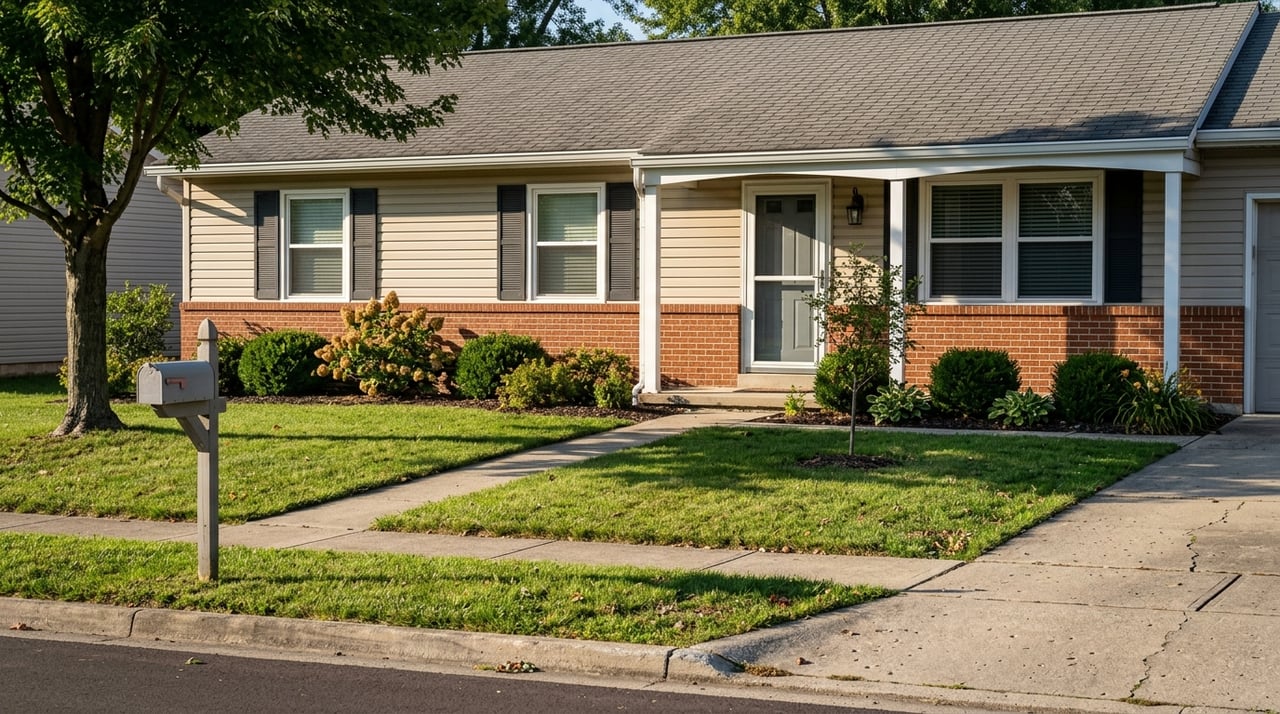
A huge share of the city’s inventory consists of brick ranches and split-level homes from the postwar era. With many systems and layouts that repeat across neighborhoods, you can standardize scopes for turnover, repairs, and upgrades. That simplifies budgeting and project management over a small portfolio. For historical context on the area’s housing patterns, review the city’s Brandt Pike Revitalization Plan.
Steady demand drivers
Proximity to Wright-Patterson Air Force Base and other regional employers creates consistent renter demand and periodic turnover tied to assignment cycles. That helps you plan for vacancy and lease-up timelines. You can find regional planning context in city documents like the Brandt Pike Revitalization Plan.
Know your numbers before you buy
Verify price and rent comps
Use multiple sources to triangulate current medians, then drill to the block level. In Huber Heights, tenure mix varies by pocket, with a majority owner-occupied base overall. That means some streets have more stable, owner-heavy profiles while others include clusters of rentals. Walk the area, review local comps, and confirm neighborhood-level tenure assumptions before you underwrite.
Property taxes: the lever that moves cash flow
Ohio uses an assessed value system, and school levies can swing the effective rate by parcel. Local reporting shows a sample median tax bill for Huber Heights near 2,068, but your actual bill depends on district millage and assessments. For underwriting, use the Montgomery County Auditor’s tools to estimate taxes based on the specific parcel and mills. Small changes here can move your cap rate more than any other expense line besides financing.
- Start with the county’s tax estimator
- See the Dayton Daily News snapshot of local tax tables for context: property tax tables
- If the home sits in a school district with recent levy activity, factor that in. For example, review Huber Heights City Schools’ financial fact sheet for neutral context on levies and finance: district financial overview
City income tax and landlord reporting
Huber Heights levies a municipal income tax. The city also requires landlords to file tenant move-in and move-out reports with the Tax Administrator within 30 days. Many first-time investors miss these steps. Review requirements on the city’s official pages:
Lease law and eviction timelines
Ohio’s Residential Landlord-Tenant Act sets responsibilities for repairs, deposits, and notices. Eviction procedures fall under the forcible entry and detainer statutes. These timelines and forms affect vacancy exposure, so plan for them in your pro forma and have lease language reviewed by Ohio counsel or an experienced local manager. You can read a plain-language summary here: Ohio landlord-tenant laws overview.
Example pro forma for a 3-bed single-family
Below is a simplified example to show how local numbers work together. Use it as a framework and swap in actual property data.
Assumptions (illustrative only):
- Purchase price: 215,000
- Market rent: 1,450 per month
- Vacancy allowance: 7 percent
- Management fee: 8 percent
- Maintenance reserve: 1 percent of purchase price per year
- Insurance: 1,100 per year (placeholder; get a local quote)
- Property tax: run two cases to show sensitivity
Quick math:
- Gross annual rent: 1,450 x 12 = 17,400
- Vacancy loss at 7 percent: 1,218
- Effective gross income: 16,182
Expenses, Case A (lower tax example at 2,300 per year):
- Management at 8 percent of collected rent: about 1,295
- Property tax: 2,300
- Insurance: 1,100
- Maintenance at 1 percent: 2,150
- Capital expenditure reserve at 5 percent of effective gross: about 809
- Total operating expenses: about 7,654
Net operating income and cap rate, Case A:
- NOI: 16,182 minus 7,654 = 8,528
- Cap rate: 8,528 divided by 215,000 = about 3.97 percent
Expenses, Case B (higher tax example near a county average effective rate at about 3,612 per year):
- Total operating expenses increase by about 1,312
- NOI drops to about 7,216
- Cap rate: about 3.36 percent
What it means for you:
- Unfinanced cap rates at recent price and rent levels often land in the low to mid single digits. To improve returns, focus on buying below median, executing targeted value-add, or using financing carefully while stress-testing vacancy, taxes, and capital items.
- The gross rent multiplier in this example is 215,000 divided by 17,400, or about 12.4. Lower GRMs generally indicate stronger gross yield, but always balance against condition, location, and risk.
Pro tip: Taxes and capital items move the needle most. Pull the parcel in the county system, and get a real inspection plus quotes for HVAC, roof, and water heater timelines before you commit.
Maintenance and management realities
Common repair cycles in postwar ranches
Expect mid-life or end-of-life replacements for HVAC systems, water heaters, windows, and roofs. A standard home inspection that covers HVAC, roof, electrical, plumbing, and foundation or basement is essential. Budget a normal maintenance reserve and a separate capital reserve for bigger-ticket replacements. For local context on the age and type of housing, see the city’s Brandt Pike Revitalization Plan.
Tenant expectations
In suburban single-family rentals, tenants generally expect working HVAC, sound plumbing, clean and functional kitchens and baths, and clear yard responsibilities. Decide whether you will include lawn care in rent or spell out the tenant’s duties in your lease.
Property management
If you are out of the area, a local property manager can source comps, set realistic rents, and control turnover. Typical fees for small portfolios run in the 6 to 10 percent range of collected rents. Even if you self-manage, consider a consult for price setting and lease-up strategy.
Compliance checklist before you buy
Use this quick list to keep your underwriting tight and compliant:
- Pull the parcel in the Montgomery County system to confirm assessed value, millage, exemptions, and the estimated tax bill. Start with the tax estimator.
- Confirm Huber Heights landlord obligations. File tenant move-in and move-out reports within 30 days and review city income tax rules. Read the Landlord Information and Income Tax pages.
- Check for any recent city code updates that affect rentals. City council actions can change requirements, so review the city site before closing.
- Verify school district boundaries for the parcel and review any recent levy activity since levies can affect your effective tax rate. For context, see the school district’s financial overview.
- Review Ohio’s landlord-tenant law and the eviction process. Understand notice timelines and court procedures. See the Ohio landlord-tenant law overview.
Exit strategies that fit Huber Heights
- Hold for cash flow. Works best when you buy below median, standardize turns, and hold expenses tight.
- Light value-add. Target kitchens, baths, and mechanicals to lift rents in select pockets.
- Sell to retail. Renovated single-family rentals can convert to owner-occupant sales if timing and condition align.
- 1031 or small portfolio sale. Huber Heights inventory can be part of a broader Dayton-area exchange or a packaged sale to local consolidators.
Your next steps
- Zero in on the right pocket. Confirm tenure mix, recent sale comps, and a realistic rent range for your target bedroom count and condition.
- Underwrite the parcel. Use the county tax estimator, request insurance quotes, and model two tax scenarios. Stress-test vacancy and capital replacements.
- Inspect and price the plan. Order a full home inspection and get written quotes for HVAC, roof, and water heater timelines. Decide your value-add scope and lease-up plan.
If you want a local perspective on neighborhoods, comps, or a simple pro forma you can reuse, reach out. I am happy to share what I am seeing on the ground and help you move at your pace. When you are ready, connect with Donte Scott to schedule a free, no-pressure consultation.
FAQs
Is Huber Heights a good first rental market?
- Entry prices are approachable and the housing stock is straightforward to maintain. With steady regional demand, it can work for first-time landlords who buy conservatively and plan for taxes and capital items.
What cap rates can I expect on single-family rentals in Huber Heights?
- Illustrative unfinanced examples land in the low to mid single digits based on recent prices and rents. Your number depends on purchase price, exact taxes, condition, and rent after any updates.
How do property taxes impact cash flow here?
- Taxes are one of the biggest swing factors. In the example, moving from a 2,300 to a roughly 3,600 annual tax bill cut the cap rate from about 3.97 percent to about 3.36 percent. Always pull the parcel in the county system.
Do I need a rental license in Huber Heights?
- The city requires landlords to file tenant move-in and move-out reports within 30 days and comply with municipal income tax rules. Check the city site for any code updates before you close.
How fast do homes sell in Huber Heights?
- Recent snapshots describe a balanced market with median days on market measured in several weeks. Verify the latest trend with current MLS data as conditions can change month to month.
