If you are thinking about buying a rental property in Huber Heights, it is easy to get pulled in by a listing that looks affordable on the surface. But a good rental deal is about more than the price tag. You need to know what rents are realistic, what ownership costs can change, and what local rules can affect your timeline and budget. Let’s dive in.
Why Huber Heights deserves a careful look
Huber Heights is a large suburban market with an estimated 2025 population of 43,905 and 17,761 households. It also has a 70.9% owner-occupied housing rate, which means it is mostly a homeownership market rather than a renter-heavy city.
That matters if you are evaluating rental property opportunities. In a market like this, you cannot assume every house will cash flow just because it is priced below nearby suburbs. You need to underwrite conservatively and make sure the numbers work with realistic rent and expense assumptions.
The city also sits in both Montgomery and Miami counties. That means your due diligence should start with the exact parcel, county, and tax district, not just the Huber Heights address.
Start with realistic rent benchmarks
One of the easiest ways to overestimate a rental deal is to use a rent number that sounds good but is not supported by the market. In Huber Heights, the citywide median gross rent is $1,258.
For another benchmark, HUD’s FY 2026 Fair Market Rents for the Dayton-Kettering-Beavercreek area are:
- Studio: $928
- One-bedroom: $1,009
- Two-bedroom: $1,273
- Three-bedroom: $1,651
- Four-bedroom: $1,817
These numbers are useful because they give you a conservative reference point for gross rent by bedroom count. Since Huber Heights has a median gross rent of $1,258 and the two-bedroom FMR is $1,273, you should be cautious when a listing only works if rent needs to come in far above those levels.
When higher projected rent may make sense
A property may still support higher rent if there is a clear reason for it. That could include more bedrooms, updated condition, a garage, or a stronger submarket within the city.
The key is not to accept a projected rent at face value. If the expected number is much higher than the city median or the bedroom-based benchmark, you should be able to explain exactly why.
Use a simple cash flow test
Before you get excited about any property, run a basic monthly cash flow screen. A straightforward formula looks like this:
- Gross monthly rent
- Minus vacancy allowance
- Minus property taxes
- Minus insurance
- Minus repairs and maintenance reserve
- Minus management and utilities
- Minus debt service
- Equals monthly cash flow
This is not fancy, but it is effective. If the property only works when vacancy is zero, repairs never happen, and every month goes perfectly, the underwriting is probably too thin for a long-term hold.
Why conservative underwriting matters here
Huber Heights can offer opportunity, but it is not a market where you want to rely on best-case assumptions. The owner-occupied profile, local compliance rules, and changing tax values all point to the same conclusion.
You want a deal that still looks reasonable even when expenses are real and timing is not perfect. That is the kind of discipline that helps you avoid buying a property that becomes a headache later.
Watch property taxes closely
Property taxes are one of the biggest reasons two similar-looking homes can perform very differently as rentals. In Montgomery County, that risk is especially important right now because the county is in a 2026 property reappraisal cycle.
According to the county, the new values from that project will be used for tax bills received in 2027. Montgomery County also notes that it has 93 separate taxing districts, which helps explain why tax bills can vary from one parcel to another.
Why parcel-level review matters
If you are comparing two Huber Heights homes, do not assume they will carry the same tax burden. Even homes that seem similar on paper can have different costs based on parcel details and district setup.
This is why broad neighborhood averages are not enough. You want to review the current parcel tax bill and build your numbers from there.
Tax timing can affect your planning
Montgomery County says 2026 real estate tax collections are due February 13, 2026 for the first half and July 17, 2026 for the second half. The county also states that real estate taxes are billed one year in arrears.
That timing matters when you are estimating carry costs or reviewing seller credits. The county also notes that delinquent balances can trigger a 10% penalty after the due date, so it pays to know exactly what is owed and when.
Understand local rental filing rules
Owning a rental in Huber Heights comes with local reporting responsibilities. In Montgomery County, residential rental property owners must register their rentals with the County Auditor and update the information within 60 days of any change.
The county says failure to register is a minor misdemeanor and can lead to a penalty of up to $150 against the property. That is not a huge number by itself, but it is the kind of avoidable issue that can complicate ownership if you overlook it.
Huber Heights has its own reporting rule too
Huber Heights adds a city-level landlord reporting requirement. Within 30 days after a tenant moves in or moves out, the owner must file a report with the Tax Administrator.
The city says violations can be fined up to $100 per unreported tenant. For a small investor, that means there may be both county and city filing obligations to track.
Income tax is part of the ownership picture
The city levies a 2.25% income tax and states that rental property income is part of the filing requirement for residents and non-residents doing business in the city. If your plan includes living in the property as a principal residence, there may also be a potential owner-occupancy credit for qualified levies and property taxes if program requirements are met.
That makes strategy important from day one. A traditional rental and a live-in house hack may not be evaluated the same way.
Budget for maintenance and permit friction
Many investors focus on interior updates first. In Huber Heights, exterior condition and permit planning deserve just as much attention.
The city requires zoning permits for many exterior changes, reconstruction, relocation, accessory structures, exterior remodeling, room additions, pools, temporary storage units, and similar improvements. The city also says Montgomery County handles many building permits and inspections, while some interior work follows a different path from city zoning permits.
Exterior upkeep is more than curb appeal
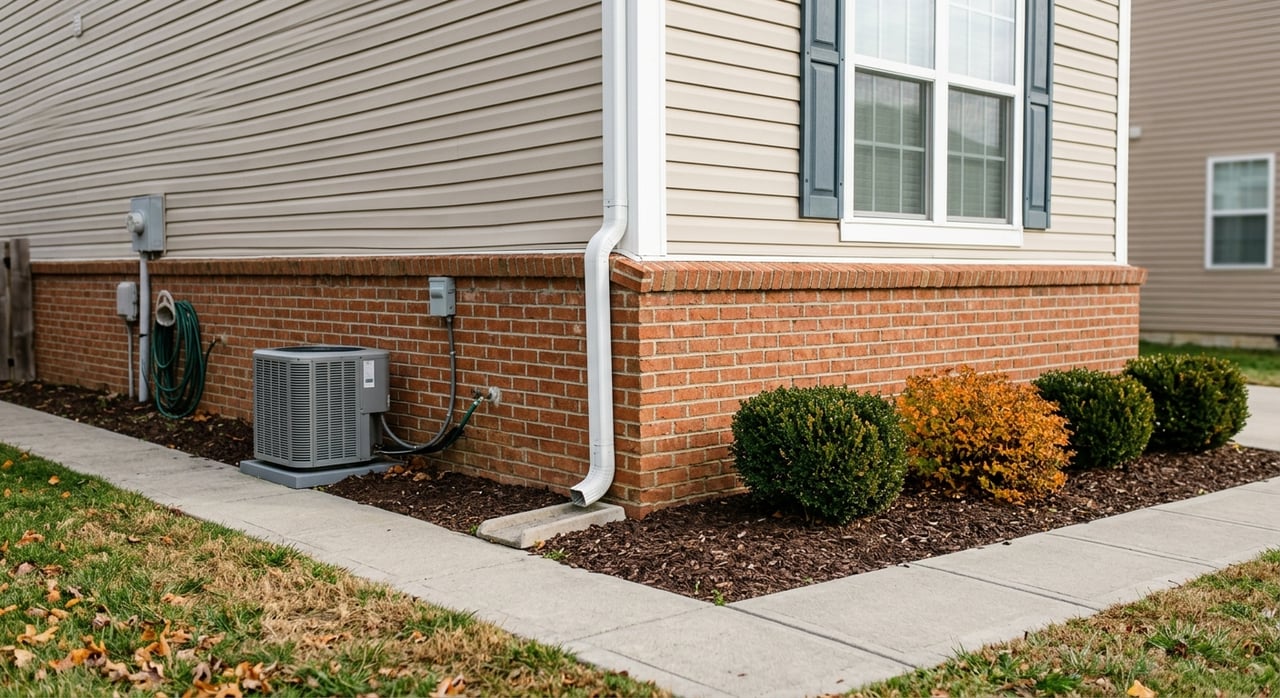
Huber Heights’ Property Maintenance Review Board focuses on exterior standards such as painted structures in good repair, trimmed grass and weeds, enclosed trash containers, trimmed shrubs and trees, and yards free of junk and debris. Inoperable vehicles are also expected to be kept in enclosed structures.
That means visible deferred maintenance is not just an aesthetic problem. It can be a sign of future compliance costs and ongoing upkeep you should include in your analysis.
Check Ohio security deposit rules
If you are new to rental ownership, security deposit rules are worth understanding before you buy. Under Ohio law, if a security deposit exceeds $50 or one month’s rent, whichever is greater, the excess must earn 5% interest if the tenant stays at least six months.
Ohio law also requires any deduction from the deposit to be itemized in writing within 30 days after the tenancy ends. This is one more reason to build organized systems early, even if you only plan to own one property.
Keep your screening and marketing compliant
Ohio and federal fair housing rules apply to rental housing. That means tenant screening, advertising, and leasing decisions should stay focused on lawful, objective standards.
Ohio Civil Rights guidance lists protected classes covered by Ohio law, including race, color, national origin, religion, disability, age, familial status, and military status. If you are evaluating rental property as a business, compliance should be part of your process from the beginning.
A repeatable way to review a listing
If you want a simple framework, use this checklist when a Huber Heights rental listing catches your eye:
- Confirm the exact parcel, county, and tax district.
- Review the current parcel tax bill instead of relying on area averages.
- Compare projected rent with the city median gross rent and the HUD bedroom-count benchmark.
- Study the exterior condition for signs of maintenance or compliance issues.
- Decide whether the property is a long-term rental or a live-in house hack.
- Confirm the permit path before assuming value-add work will be quick or easy.
This approach will not guarantee a perfect deal. But it can help you avoid common mistakes and make better decisions with the information available.
What makes a Huber Heights rental attractive
In my view, the stronger opportunities in Huber Heights are the ones that work on conservative rent assumptions and realistic expense planning. You want a property that can handle vacancy, maintenance, and changing tax costs without depending on a best-case scenario.
That is especially true in a mostly owner-occupied suburb. When you evaluate carefully at the parcel level and keep your underwriting honest, you put yourself in a much better position to spot the properties that truly fit your goals.
If you are weighing a Huber Heights property and want a practical second opinion before you move, Donte Scott offers a free, no-pressure consultation built around clear numbers, local insight, and a client-first approach.
FAQs
What rent should you use for a Huber Heights rental analysis?
- Start by comparing the property’s projected rent to Huber Heights’ median gross rent of $1,258 and the HUD Fair Market Rent for that bedroom count.
Why do property taxes vary between Huber Heights homes?
- Huber Heights spans more than one county, and Montgomery County says there are 93 separate taxing districts, so tax bills can differ by parcel even when homes look similar.
What rental registration is required in Huber Heights?
- In Montgomery County, rental owners must register with the County Auditor, and in Huber Heights, owners must report tenant move-ins and move-outs to the Tax Administrator within 30 days.
What should you check before planning renovations on a Huber Heights rental?
- Confirm whether the project needs city zoning approval, county building permits, or both before assuming the work can start right away.
How can you tell if a Huber Heights rental deal is too thin?
- If the numbers only work with zero vacancy, no repair reserve, and aggressive rent assumptions, the deal is likely too tight for a stable long-term hold.
What should you watch for in a Huber Heights property exterior?
- Look for issues tied to local maintenance standards, including paint condition, overgrown grass or weeds, trash storage, yard debris, and overall exterior upkeep.
