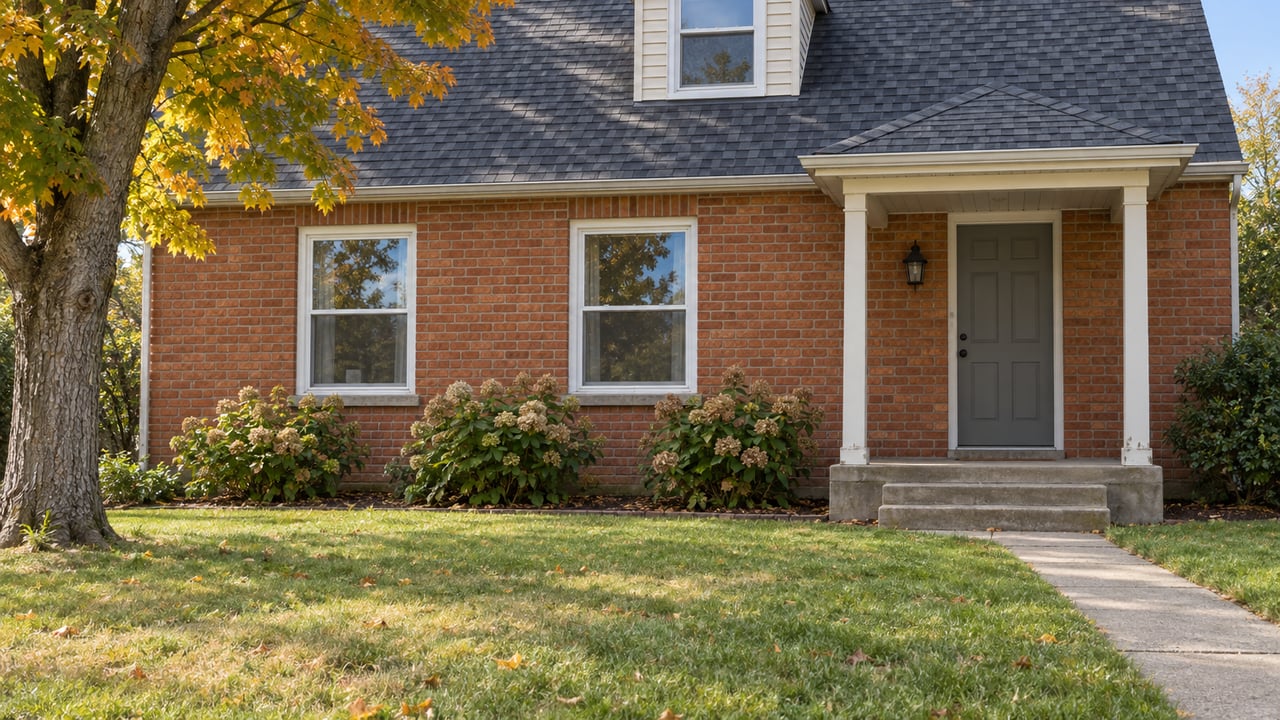
The annual property tax figure on a Kettering listing reflects the credits the current owner has on file. Starting with the bills Montgomery County homeowners pay in 2027, those credits are worth more for one kind of owner and are disappearing for another.
A reduction the seller already filed can stay on the bill for the tax year of the sale, but after that it doesn't follow the house to the next owner. If you buy a Kettering home to live in, you have to claim the owner-occupancy reduction yourself. A new Ohio law has made that reduction several times more valuable than it was a year ago. On many Kettering purchases, that claim will do more to your carrying cost than this year's headline value jump.
The paperwork step that decides your bill
Ohio law ties the owner-occupancy reduction to the transfer itself. The application for a home that changed hands is built into the county auditor's conveyance form, the paperwork that records the sale. The statute also says that if the buyer doesn't affirm on that form that the home is their homestead, they can't receive the reduction until they file a proper application.
If the box doesn't get checked at closing, you can still file. Ohio Revised Code 323.153 sets a filing deadline of December 31 of the year you want the reduction for. The state form is DTE 105C. It asks you to confirm that you owned and lived in the home as your principal residence on January 1 of the application year. The form still describes the reduction as 2.5%. It was last revised in 2016, so that figure is out of date.
Missing the deadline costs more than a late fee. Under the statute, a late application can only go back one year, filed alongside your original application, and the auditor refunds that amount as an overpayment. Any earlier year is lost. The Ohio Department of Taxation tells homeowners to check whether they already receive the reduction and to apply if they don't.
A year ago, this was a small line item. It isn't anymore.
How H.B. 186 split owner-occupied and rental bills
Ohio House Bill 186 took effect March 20, 2026. It made two changes at once. It phases out the 10% rollback that every residential property used to get, and it phases up the owner-occupancy reduction that only homestead owners receive. The enacted bill text sets the owner-occupancy schedule at 5.70% for the first tax year, then 8.92%, then 12.15%, then 15.38% from the fourth year on.
Ohio real property taxes are paid in arrears, so tax year 2026 is what shows up on bills paid in 2027. Here's how the two credits combine, using the schedule from the Ohio Legislative Service Commission's analysis:
| Tax year | General residential rollback | Owner-occupancy reduction | Total for an owner-occupied home | Total for a home that isn't owner-occupied |
|---|---|---|---|---|
| Before H.B. 186 | 10% | 2.5% | 12.5% | 10% |
| 2026 | 7.5% | 5.70% | 13.2% | 7.5% |
| 2027 | 5% | 8.92% | 13.92% | 5% |
| 2028 | 2.5% | 12.15% | 14.65% | 2.5% |
| 2029 | 0% | 15.38% | 15.38% | 0% |
In the words of the LSC's bill analysis, the combined effect is "to increase the total credit for owner-occupied property, from 12.5% to 15.38%, and to eliminate the rollback for residential property that is leased to renters or otherwise not used as the owner's primary residence."
These percentages don't apply to your whole bill. They apply to taxes from "qualifying levies." New and replacement levies approved in or after November 2013 aren't counted. So the dollar effect on a given Kettering parcel depends on how much of its bill comes from older levies.
The gap between the two right-hand columns widens every year through 2029.
Why the listing tax figure can mislead
Take two Kettering homes at similar prices. One is sold by a family that lived there and had the owner-occupancy reduction on file. The other was a rental, so its bill never had that reduction and is now losing the general rollback too.
The first listing shows a lower tax figure, but that figure carries a credit you have to claim yourself. The second listing shows a higher figure, but if you move in and file, your bill can come in under what the listing shows. Both numbers are accurate for the current owner. Neither is your bill.
This matters most for buyers comparing two homes on monthly payment. A rental listing can look more expensive to carry than it will be for an owner-occupant, and an owner-occupied listing can look cheaper than it will be if the new owner never files.
The reappraisal headline everyone is watching
Montgomery County updates every property's value every three years. The 2026 triennial update comes halfway between the county's six-year reappraisals, after a 2023 cycle that the Dayton Daily News called a historic 34% average increase countywide.
The 2026 numbers for Kettering are large. The Dayton Daily News table of tentative values puts Kettering's average single-family home at $238,690 for 2026, up an average of $35,697, or 17.6%. For buyers comparing suburbs, the same table shows Centerville at 13.1% and Washington Twp. at 13.4%. These are tentative averages, not medians.
Despite those increases, the bill projection is modest. The auditor's office projects a countywide average tax increase of up to 2%. WYSO reported in July 2026 that most owners could expect an average increase of 1.5% to 2% on 2027 bills. The Montgomery County Auditor's FAQ says it directly:
"In most cases your taxes will not increase proportionately with your property value. Just because your property values increased 19% does not mean that your property taxes will increase 19%"
The main reason is Ohio's H.B. 920 reduction factor, which the Ohio Legislative Service Commission explains here. It generally keeps collections from most fixed-rate voted levies on existing property from rising with appraised value. It doesn't apply to inside millage or to certain fixed-sum and debt levies. H.B. 335, effective March 20, 2026, also limits how much inside millage revenue can grow in a reappraisal or update year to an inflation factor, starting with tax year 2026.
Put that next to the table above. A projected countywide average increase of up to 2% from the value update is smaller than the gap H.B. 186 creates between an owner-occupied bill and a rental bill, even in its first year. For a Kettering buyer, filing the owner-occupancy claim is the bigger lever.
Dates on the Kettering calendar
- November 3, 2026. Montgomery County's official sample ballot for Kettering precinct KT 1-A lists city charter amendments and state races, but no local property-tax levy. The Dayton Daily News list of county tax issues includes new levies in Dayton Public Schools, Northridge, Jackson Township and Jefferson Township, and none in Kettering.
- December 31, 2026. This is the statutory filing deadline for an owner-occupancy application for the 2026 tax year.
- January 1 to March 31, 2027. According to the Auditor's FAQ, this is the window for filing a formal value appeal with the Board of Revision once taxes have been calculated.
- 2027 bills. The new values take effect at the start of 2027 and first appear on bills paid that year.
A few questions buyers ask me
If the seller had the credit, does it stay on the bill after I close? Ohio Revised Code 323.152 says a reduction already filed for a tax year isn't forfeited just because the home sells later that year. After that, the new owner needs their own application on file.
Is this the same as the homestead exemption? No. The homestead exemption is a separate, eligibility-based program. H.B. 96 raised the standard exemption from $28,000 to $32,000 and the enhanced exemption from $56,000 to $59,000, with an income threshold of $42,500.
Should I appeal my new value? That's a decision for you and a tax professional. The Board of Revision window is the formal route the county describes. This post is general information and isn't legal, tax or financial advice, so please confirm how these rules apply to your parcel with the Montgomery County Auditor or a qualified tax professional.
If you're weighing two Kettering homes and the tax lines don't make sense side by side, I'm glad to go through the auditor records with you before you write an offer. I'll also make sure the owner-occupancy affirmation is on your list for closing day. Schedule a free, no-pressure consultation with Donte Scott, and bring the addresses you're comparing so we can pull each parcel's auditor record together.
