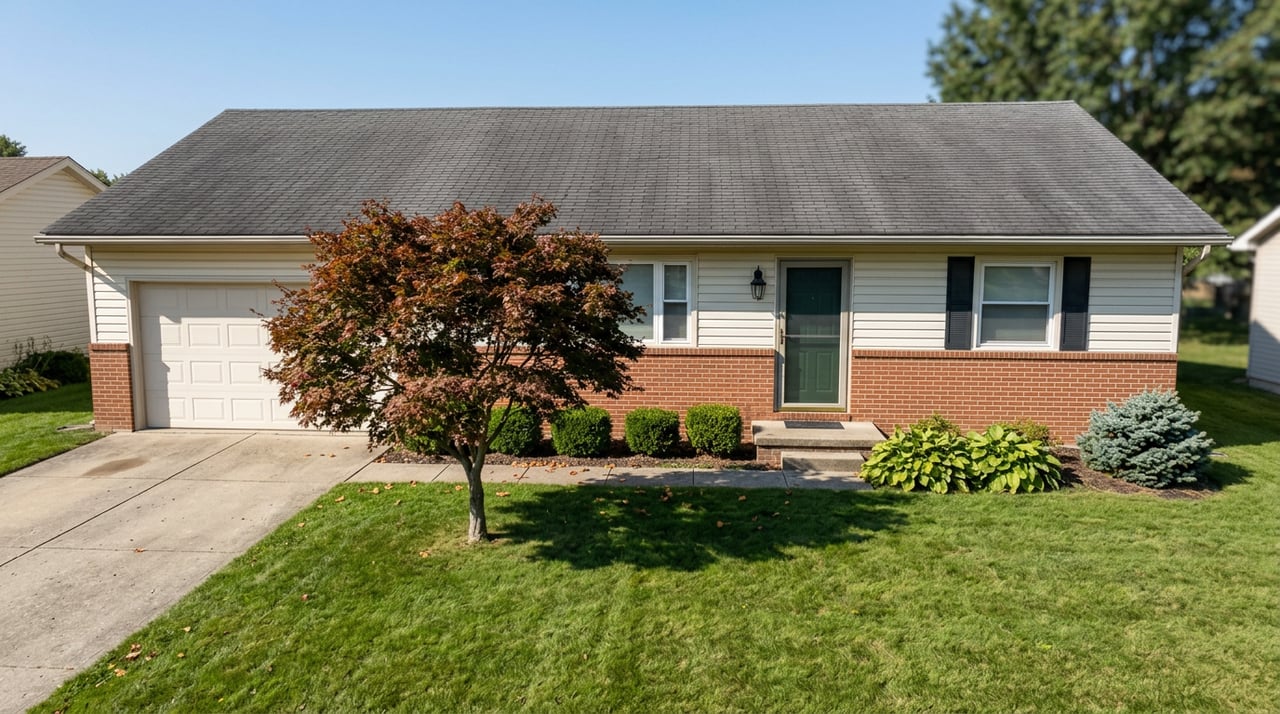
The value comes back fine. The comparable sales support the price. Then the notice of value lands with a repair condition attached, and it's the same one you saw on the last file, and the one before that: the electrical panel.
If you've financed more than a couple of Huber Heights purchases with a VA loan, you've seen this pattern before it becomes a pattern. It isn't bad luck and it isn't a run of unlucky sellers. It's math. Huber Heights built more than 10,000 single-family homes in a single 36-year construction wave, and a meaningful share of that wave happened to fall inside the exact years when a defective panel brand was standard equipment.
One builder, one era, one recurring flag
Charles H. Huber started Huber Homes in 1956 and kept building through 1992, putting up 10,707 single-family homes and 2,258 multi-family units in that stretch, according to the Huber Heights Regional Chamber of Commerce. The city carried the slogan "America's Largest Community Of Brick Homes" for years, and it earned it. That kind of concentrated, single-developer construction history is rare. Most Dayton suburbs grew from a mix of builders over decades. Huber Heights grew from one company's product line.
That matters for VA buyers because Federal Pacific Electric Stab-Lok panels, the electrical panel brand most commonly flagged on VA appraisals of older homes, were manufactured from the 1950s through the 1980s. Zinsco and Sylvania panels, which carry their own documented overheating problems, sit in the same window. Huber Heights' housing stock and the FPE production window aren't a coincidence of timing. They're the same decades.
The VA's Minimum Property Requirements don't name brands directly. They require that a home's electrical system be safe, functional, and adequate, and the appraiser is instructed to note visible deficiencies including known hazardous panel brands. The appraiser isn't an electrician and doesn't open the panel cover or test breakers with a meter. But a visible Federal Pacific or Zinsco label is enough to trigger a flag, and once it's flagged, the lender won't clear the file until it's replaced. Replacement typically runs $1,500 to $4,000 depending on the home's electrical service size and local labor rates.
It's negotiable, but it's not optional
The repair itself isn't a dealbreaker. VA electrical repairs are negotiable between buyer and seller, and either side can fund the fix, whether that's the seller completing the replacement before closing or the buyer taking a credit and handling it after. What isn't negotiable is the requirement itself. Once an appraiser flags a known defective panel, a completion inspection has to verify the fix before the lender will clear the loan. That verification step, not the repair cost itself, is usually what adds time to a closing.
The VA also updated four Minimum Property Requirement rules effective May 1, 2026, including dropping the requirement that non-vented fireplaces carry a licensed contractor's certification for an oxygen-depletion sensor on appraisals ordered after that date. It's a small change on its own, but it's a useful reminder that MPRs aren't static. If your last VA purchase closed a couple of years ago, the checklist your lender is working from today isn't identical to the one you remember.
The panel isn't evenly distributed across the city
Not every Huber Heights address carries the same odds of a flag. A local plumbing company that services the city draws a clear line between newer construction in Carriage Trails and Thomas Paine Estates and older sections closer to Fishburg, Huber Center, Oak Grove, and the Dialton area, where original systems and multiple waves of partial updates are more common. That same age gradient that shows up in plumbing calls applies to electrical service too. A home near Carriage Trails built well after the Huber Homes era is a different appraisal risk than a brick ranch near the Shull Road corridor that's carried its original service since the Johnson administration.
A Dayton-area inspection firm that works across several Miami Valley suburbs puts it plainly in its own comparison of what it finds market to market: Huber Heights inspections turn up brick ranch mortar deterioration, original electrical panels, and slab-on-grade moisture more often than the issues it flags in Kettering, Beavercreek, or Centerville, where the recurring findings run toward knob-and-tube remnants, aging HVAC, or clay soil settling instead. Every close-in Dayton suburb has an inspection signature shaped by when and how it was built. Huber Heights' signature is the panel.
What the slower closing timeline is actually telling you
Here's where the current market data lines up with the mechanism instead of just decorating it. Over the three months ending July 2026, Huber Heights homes sold at a median price of $255,000, up 6.4% from the same period a year earlier, and 212 homes changed hands in July alone, up from 179 the year before. That's a market with real demand behind it. But the average time on market stretched to 32 days, up from 27 days a year ago, even as price per square foot actually dropped 3.2% year over year.
Rising prices with softening per-square-foot value and a longer time to close is an odd combination if you assume the friction is about negotiating price. It makes more sense if some share of that extra time on market is coming from appraisal-stage conditions that have to be resolved before a file can clear, not from buyers and sellers haggling over dollars. A panel flag doesn't kill a deal. It does add a repair estimate, a contractor visit, a completion inspection, and a re-submission to the file, and all of that takes calendar days a straightforward appraisal wouldn't need.
What this means if you're buying or selling here
If you're selling a Huber Heights home built during the Huber Homes years and you're marketing to VA buyers, a quick look at your panel before you list saves everyone a step. If it's a known Federal Pacific or Zinsco unit, you can decide up front whether to replace it before listing or price in a credit, rather than finding out after an accepted offer when the appraisal comes back with a condition attached.
If you're buying with a VA loan, remember that the appraisal and the inspection are two different things. The appraisal will catch a visible panel brand issue because it has to. It won't catch a wiring problem hiding behind drywall, a double-tapped breaker in a subpanel, or GFCI protection that's missing in a bathroom that was never updated. A home inspection isn't required for a VA loan, but on a housing stock this uniform in age, it's the difference between finding a problem before you're under contract on repairs and finding it after.
A few questions worth asking directly
Does every Federal Pacific panel actually fail? Not every one, and not every VA appraiser flags them the same way. Whether it's caught depends on the appraiser's training and local norms, similar to how peeling paint gets treated differently on pre-1978 homes. But if it's flagged, replacement is required before the lender clears the file.
Can I keep a fuse box and still get a VA loan? A fuse box alone won't automatically disqualify a property. The VA's concern is safety and adequacy, not the specific technology, though a fuse box often signals an electrical system that hasn't been touched in decades and may raise other questions during the appraisal.
Who typically pays for the panel replacement? It's a matter of contract negotiation. Sellers can complete the repair before closing, or buyer and seller can agree on a credit at closing so the buyer handles it after moving in. Either path requires a completion inspection before the loan can be cleared.
If you're weighing a purchase or a listing in Huber Heights and want a clear read on what a specific address is likely to run into during a VA appraisal, Donte Scott can walk through it with you before you're under contract, not after. Schedule a free, no-pressure consultation and get the plan in place while you still have time to act on it.
